


Navigating the demands of a PhD program is a monumental task, but understanding how to carve out a good life outside of the lab can often feel even more elusive. When I was reflecting on this to write an article, I almost felt I wouldn’t be able to do justice to the piece. My own PhD journey was filled with substantial personal challenges, from a broken ankle to sleeping on a friend’s couch for two months, to a parent’s serious health setbacks in my final year. In my case, I was constantly striving to make up for lost time in the lab, leaving me with little to no bandwidth for much else. In short, the PhD consumed me!!! In good conscience, I could not offer advice that I hadn’t put into practice.
But Christos Efthymiou, PhD, of Biovectoral, offered to provide you practical tips that would resonate with your experiences. I connected with Christos on Substack, and beyond our shared background in science, I learnt he is also a fellow Johns Hopkins alumnus and we did the same Master’s program graduating in different years though!!! Small world indeed. He describes himself as a scientist, writer, and builder exploring ambition, careers, and reinvention, making him the perfect candidate to shed light on this subject.
In this article (my first collab!), Christos will share his unique perspective on finding balance, achieving a fulfilling life while pursuing a PhD, and succeeding in your academic pursuits. So, without further ado, I’ll allow Christos to take over from now on The Binding Site.
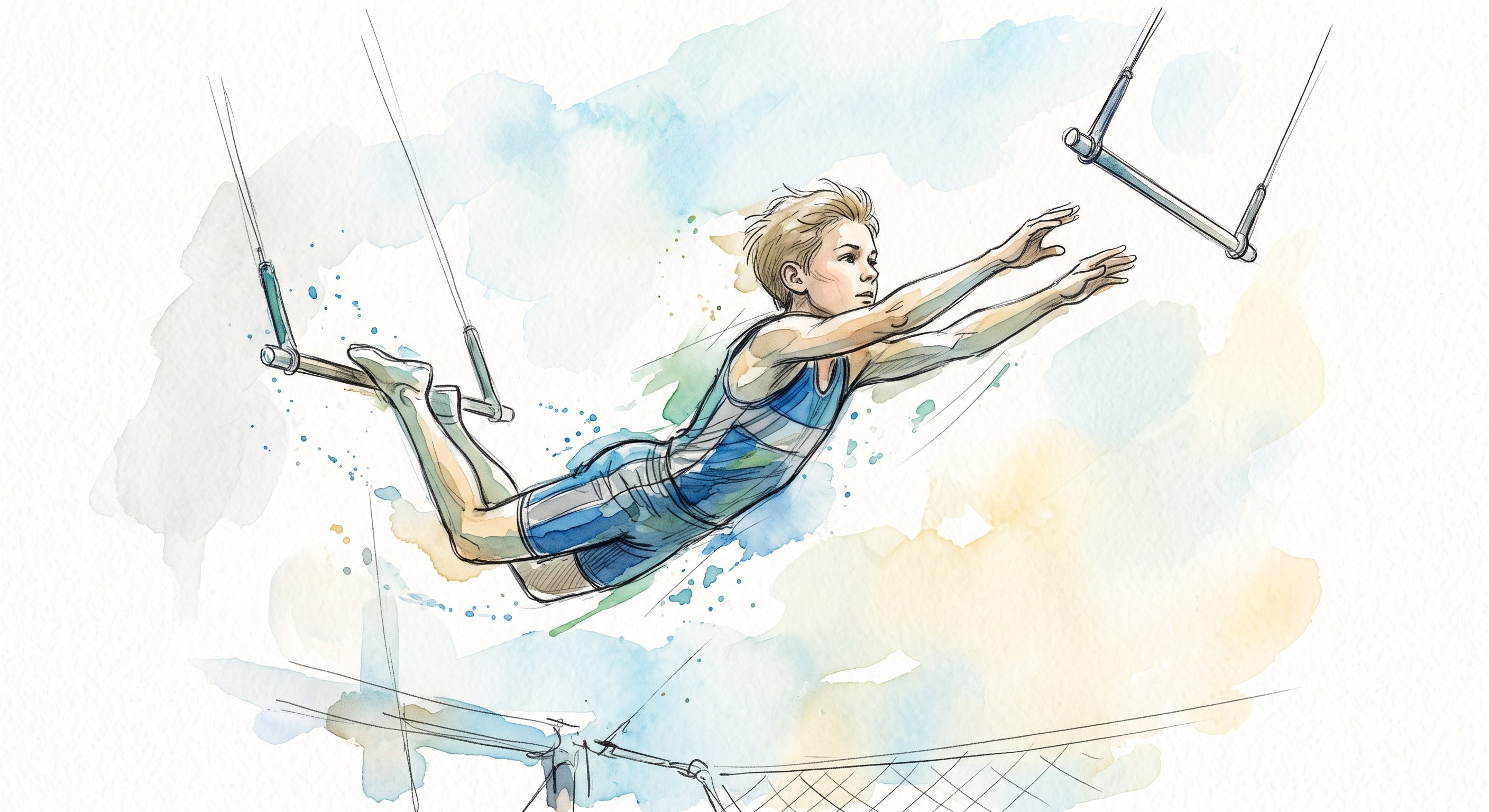
During my PhD, I learned how to fly on a trapeze. Literally.
I climbed up a ladder, stood on a tiny platform far higher than I normally would want to be, held onto a bar as tightly as my hands would allow, and jumped.
The first time that I did it, I was beyond terrified, and I was also terrible. I had no idea what I was supposed to do or how to control my body moving through the air like that, and there was something very uncomfortable about forcing myself to just jump.
But that also was the point. For a few hours, I was not a PhD student trying to keep up with a project, impress my supervisor, or rerun an experiment. Instead, I was a circus performer with nothing on my mind but the task immediately before me.
I know when you’re doing a PhD, sometimes the last thing you want to do is think about having a life outside of your work. You come home exhausted, and all you want to do is plop down on the couch and scroll through Instagram while having Netflix on in the background.
And I don’t think you need to avoid that. Believe me, I had plenty of days like that during my PhD.
But investing the time to actually develop your personal life alongside your professional life will help you in more ways than you can imagine. So I’m not saying to add spending your weekends in Lisbon or going to concerts every Thursday night to your task list.
But I also think it’s so important to remind yourself who you are outside of work. During my PhD, I had endless side adventures that I remember far more than another long day in the lab.
I had my friends over for Thanksgiving, even though my apartment wasn’t perfect and the food took longer than expected. I went to game nights where everyone argued over the rules no one actually took the time to read properly. I bowled a 221 during my PhD that I still think about with an amount of pride that’s definitely unreasonable.
All of those things had nothing to do with my PhD, but I loved it. I loved that there was no academic value, it didn’t make my CV stronger, and no one was going to cite it, review it, or fund it ever. It was just mine, and I wouldn’t have traded that for anything.
I think one of the dangers of doing a PhD is that it starts becoming your entire identity. Your week is organized around your work, and your self-esteem becomes attached to progress. Your confidence rises and falls with results, supervisor comments, reviewer feedback, and failed experiments.
And if you’re not careful, it starts to consume your entire life. You don’t see your friends for months at a time because you’re just too busy. Your hobbies become things that you used to do. Your health, both mental and physical, become something that you’ll worry about after the next deadline.
But there’s always going to be a reason to delay your life. In your first year, you’re just trying to keep up. Everything feels new and everyone seems smarter than you, so you can’t think about anything other than doing your work. Then you have your upgrade or qualifying exam to worry about. Then your first paper that needs to be submitted. Then revisions. Then a conference. And before you know it, your thesis deadline is coming up and you need to prepare for your defense while also applying for jobs.
So if you spend the whole time telling yourself that life can properly start once things calm down, you’re going to miss years of your life because the reality is that things will never calm down. Even after you graduate, you’ll have a whole new list of reasons to delay your life.
I completely understand why people fall into this trap, especially in academia. In a PhD, you’re constantly reminded that there’s someone else working late, someone publishing more, and someone who seems more focused, intense, and willing to sacrifice everything without complaints.
But I don’t think you become a better scientist by foregoing your personal life. In fact, I think the opposite is true. When your entire life is built around your PhD, every setback hits so much harder.
A failed experiment isn’t just a failed experiment, but a reflection of your intelligence. A slow month isn’t normal, but proof that you’re falling behind and not cut out for this path.
But when you have a life outside of your degree, the PhD is still important but it’s not the only thing holding you together. You can have a bad day in the lab and still look forward to going to trivia night with your friends, or get bad comments back from your supervisor and get your mind off of it with a long walk in the park.
So I want you to remember that your real life doesn’t begin after you reach a certain milestone or goal. Your real life is right now. It’s your day to day, how you feel, and how you spend your time.
Now I know that if you asked most PhD students, they don’t actually want to not do anything besides sit on their couch after work. They know that their friendships matter, that exercise really does help, and that spending their evenings glued to their phone isn’t the healthiest. But it can be hard to break out of that cycle.
So here’s what I recommend.
1. Stop relying on motivation.
If the only way you see your friends, exercise, cook, or do anything you actually want to is by waiting until you feel relaxed and fully caught up, then it’s never going to happen.
There’s always going to be something unfinished or a reason to stay a little later, like to answer one more email, and you’ll convince yourself that next week you’ll make the time.
So you should make some parts of your life so simple and practical you can’t avoid them. Have a standing dinner with your friends once a month. Or a walk every Sunday morning. Or join a class, club, or sport that has a weekly meeting or game that you just can’t miss because it’s scheduled at a specific time.
You don’t need to overfill your calendar to the point that your life becomes another project to manage, but if you give yourself a few anchors that you don’t even have to think about you’ll automatically start living more.
2. Fit your life to your actual schedule
The second thing is to choose things that actually fit what your life looks like. If you have a long commute, don’t plan your social life around activities that require you go home first and leave again. Find something near campus, close to the lab, or on your way home. And if you’re too exhausted to do anything in the evening, then do things during the day!
Meet a friend for lunch. Go for a walk before work or go see a movie on a Saturday morning. And don’t for one second believe you need to spend lots of money to have a life.
You can go to university events, free museums, campus societies, public lectures, walking groups, library talks, potlucks, boardgame clubs, or volunteer, take community classes, cook a meal with your friends, or just ask someone if they want to get a coffee and walk around the city.
3. Be the one who suggests something
And finally, don’t be afraid of being the person who suggests something. Many people are tired, wrapped up in their work, and yet are just as lonely as you. I guarantee people will say yes to any plan you suggest far more often than they’ll say no.
I’m grateful for my PhD and for what it taught me, the people it brought into my life, and the version of myself I became through it. But I am also grateful that I didn’t let it be the only story I was living.
I was a PhD student. But I was also a friend, a host, a beginner, a person making dessert in his kitchen, a person bowling the best game of his life for no reason at all, and a person standing at the top of a trapeze platform trying to convince himself to jump.
Indeed insightful. Those final lines beautifully capture the multi-faceted experience of being a human while pursuing a high-level degree. If you loved this article and the depth Christos brings to his work, please visit his publication, Biovectoral, and show your gratitude and love by subscribing to his page. Thank you, Christos, for dropping by on The Binding Site.
This site is free and I intend to keep it that way for as long as I can because good science communication should be accessible, especially for students. If you enjoy what you read and feel like buying me a coffee along the way, I won't say no. ☕ And if you're not a student, consider paying it forward to one who is.
 | A guest post by
|
This is a beautiful piece that captures so accurately the journey of pursuing a PhD while trying to maintain some ounce of equilibrium in our personal lives and identity. It reminded me of something my supervisor said during my PhD defence: he was glad that I had finally earned the title of “Doctor of Perseverance,” which, according to him, was the most fitting expansion of PhD. 🙏🏾