
The Binding Brief: Bundibugyo Ebola Virus, Leakproof SDS-PAGE gels, and Google DeepMind's strategy
No. 01 | May 20, 2026

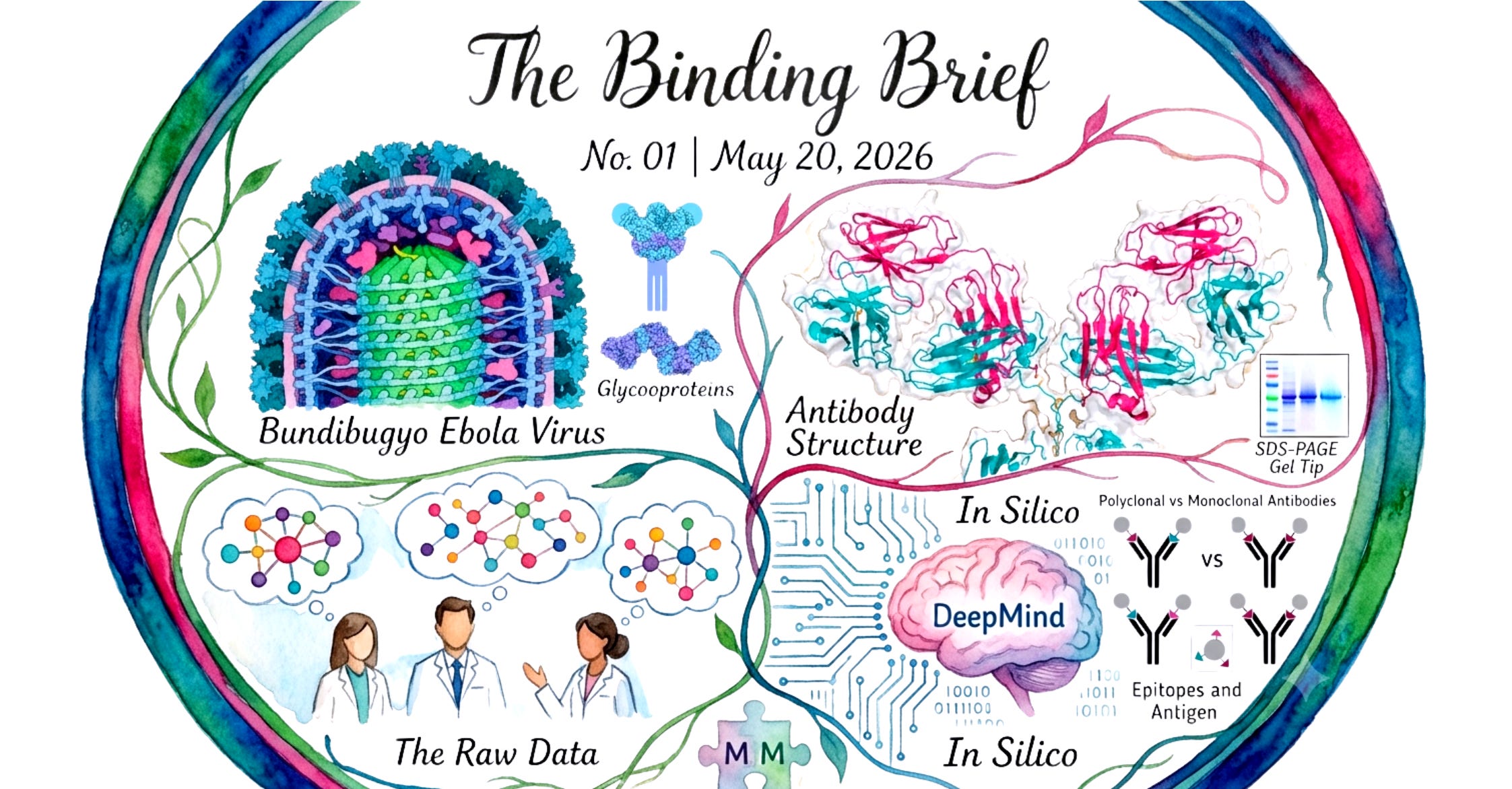
Welcome to the first edition of the ‘The Binding Brief’, a weekly newsletter dropping in your inbox every Wednesday where we shall journey together into the world of antibodies.
This week, we have some exciting things to discuss.
Raw Data: Does it matter what you work on (or) who you work with? 🔗
This Week’s Deep Dive: Antibodies and their elegant structure 🔗
Bench Notes: Is there a way to leakproof your SDS-PAGE gels in the lab? 🔗
Antibody Spotlight: Can we use the existing monoclonal antibodies for the recent Ebola outbreak in the DRC and Uganda? 🔗
In Silico: Where are we today in the world of artificial intelligence for biological applications? 🔗
Antibody Term of the Week: A surprise segment to build our antibody vocabulary 🔗
1. The Raw Data
We’ve always been taught to ‘find our passion’ - to decipher what really gets us going each day, what makes our hearts beat with inspiration, what is the one thing that makes our soul happy, etc. (The real answer is coffee is what gets us going each day. But, I digress.) This whole ‘find your passion’ narrative has always felt a little over the top to me. There are enough health challenges in humanity that biology is never going to run out of problems to solve. And individual interests change over time anyway. That’s just being human.
What I think matters more is where your energy comes from. Passion is energy. But energy doesn’t only flow from what you work on. Think about the colleague who works on something you find completely uninteresting but shows up every day with genuine enthusiasm, versus the one who shares your exact research focus but drains every room they walk into. Which environment actually moves you forward?
We are a sum of the people we surround ourselves with. Surround yourself with people who genuinely want to make a difference, and you’ll find your thinking expanding well beyond your own project and professional pursuits. What you work on matters. But the most important factor in that equation is who you work with.
2. This Week’s Deep Dive
In the world of antibodies, every interaction between an antigen and antibody can be considered as a lock-and-key mechanism in all simplicity. Consequently, the structure of the antibody is extremely important, that dictates its functionality. Just to appreciate the exquisiteness of antibody creation: there are about ~1500 pathogen species (disease causing species) all around us and a massive amount of sub-species as well. But, just with the 6 CDR loops on the antibody, our immune system is able to bind and attack this wide range of pathogens. It all comes down to the elegant structure of antibodies with this diversity in action created by the process of homologous recombination. Check out this article to learn more on the elegant structure of antibodies (my first article on Substack!).
Antibodies — Structure Meets Stardom

If we had a ‘Paris Fashion Week’ in the human body, antibodies would definitely be the showstoppers.
3. Bench Notes
SDS-PAGE gels are a routine part of any molecular biology lab. Every student runs them at some point, and a sharp band at the right position can genuinely make your day. But for labs that cast their own gels, the process can be tedious. Nothing is more frustrating than a leaking gel right as you’re about to load your protein samples.
Here’s a tip a labmate passed on to me: pour a thin plug layer before your resolving layer. The plug is roughly a 50% acrylamide solution and solidifies within seconds. It was an absolute game-changer for making leakproof gels. Some labs do buy ready-made gels, which can be quite pricey. However, even for those labs, casting gels in-house is a more economical option especially when you’re playing around with different experimental conditions (and gel compositions).
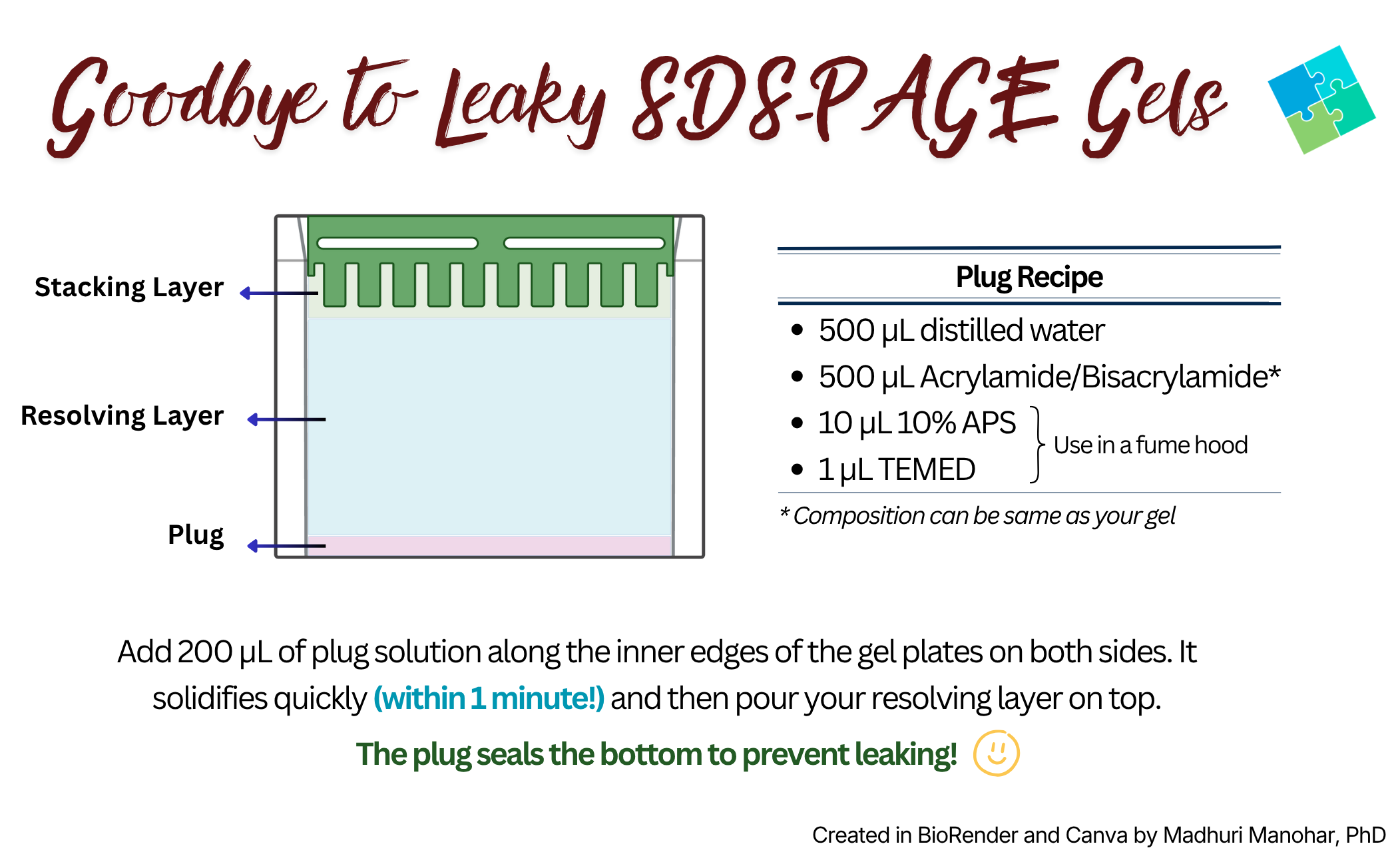
Share this tip with the PhD students in your life and help them bid adieu to leaky SDS-PAGE gels.
4. Antibody Spotlight
If you’ve been following the news, Ebola is in the news again as of May 2026. Ebola in humans is primarily caused by 4 orthoebolaviruses namely Zaire ebolavirus (EBOV), Sudan ebolavirus (SUDV), Taï Forest ebolavirus (TAFV), and Bundibugyo ebolavirus (BDBV). On May 16, 2026, the World Health Organization has determined that the Ebola disease caused specifically by the Bundibugyo virus in the Democratic Republic of the Congo and Uganda as public health emergency of international concern.
We currently have 2 FDA-approved monoclonal antibodies (mAb) to combat the Zaire ebolavirus: Inmazeb (REGN-EB3) and Ebanga (mAb114). The main question is: will the existing monoclonal antibodies work for the recent Ebola outbreak in the DRC and Uganda which is the Bundibugyo virus?

When we look at the structure of EBOV, it has a glycoprotein (GP) on its surface whose main function is to bind the receptors on a cell surface, thereby allowing the RNA genome to get inside. If we can stop entry, we can stop infection, right? Inmazeb (REGN-EB3) contains a mixture of 3 mAbs atoltivimab, maftivimab, and odesivimab-ebgn that binds non-overlapping epitopes of the glycan cap domains in GP1, receptor binding region for the host receptor, and internal fusion loop, respectively. Ebanga (mAb114) contains ansuvimab and its epitope specificity spans the receptor binding region. Thus, use of these mAbs results in the inhibition of the binding of the virus to the host (humans) receptor NPC1-C (Rayaprolu et al., 2023; Rijal et al., 2023).
So, why can’t we use the same monoclonal antibodies against the Bundibugyo virus? I was curious about this too. I ran an Multiple Sequence Alignment to compare the amino acid sequence of the glycoproteins of EBOV and BDBV and it showed only a 67.07% identity. Sadly, that’s an average identity between the glycoproteins to expect these FDA-approved mAbs to neutralize the Bundibugyo virus as well. This underscores the need to develop broad-spectrum mAbs capable of acting on different members of the same virus family.
The May 2026 Ebola outbreak is an evolving story. For most accurate information, always check out authentic sources only: WHO, African CDC, and National Health Authorities. I’d recommend epidemiologists Jessica Malaty Rivera, MS and Katelyn Jetelina, and virologist Dr. Angela Rasmussen here on Substack.
Also, please don’t spread misinformation.
That’s probably the bigger epidemic that scientists are trying to fight!!!
5. In Silico
There is a lot of buzz about Artificial Intelligence (AI) in every field. In protein and antibody development, AlphaFold is already a game changer in structural predictions of proteins. I was reading a recent interview with Pushmeet Kohli, VP of Science and Strategic Initiatives at Google DeepMind. AlphaFold, AlphaGenome, AI Co-Scientist are some of the things that he has worked on, with so much more AI-for-science initiatives under his portfolio. How DeepMind decides which science problems to solve was an interesting insight for me. Read this interview by Pablo Lubroth, a fellow Substacker.

6. Antibody Term of the Week
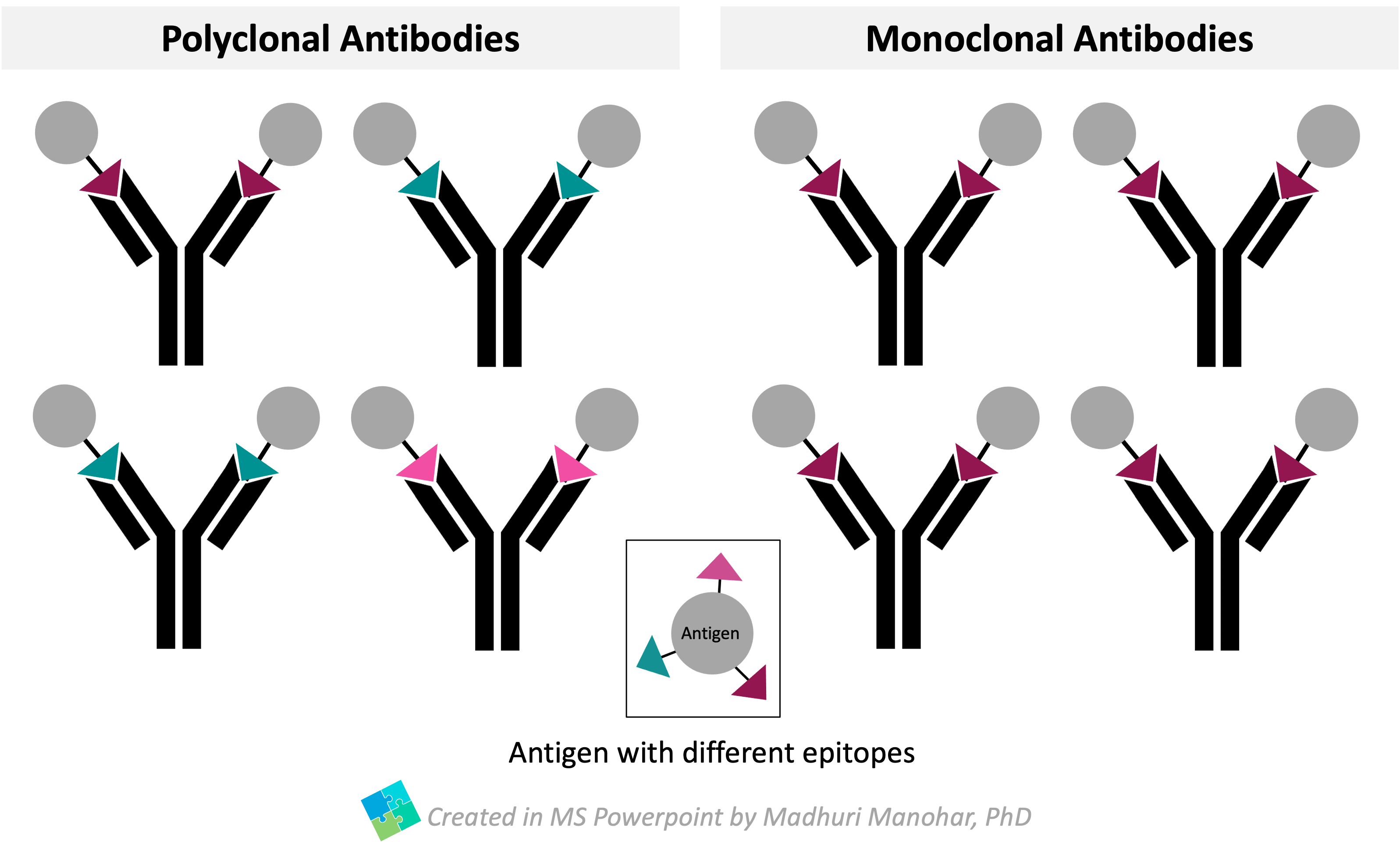
Just felt like giving my readers a little extra this week. Let’s build our antibody vocabulary together. Going back to basics, what’s the difference between polyclonal and monoclonal antibodies?
An antigen contains different segments called epitopes (the colored triangles), which are sites that antibodies can target. Polyclonal antibodies are a mixture of antibodies that can bind different epitopes of the same antigen. Monoclonal antibodies, on the other hand, target exactly one kind of epitope on the antigen.
I hope you all enjoyed the very first edition of ‘The Binding Brief’. If you have suggestions for topics you’d like to know more about… ⤵️
This site is free and I intend to keep it that way for as long as I can because good science communication should be accessible, especially for students. If you enjoy what you read and feel like buying me a coffee along the way, I won't say no. ☕ And if you're not a student, consider paying it forward to one who is.
The Google DeepMind section is the one that caught my attention. AI moving from protein structure prediction into antibody design feels like a natural next step, but the practical implications for how quickly new therapeutics can be developed are enormous. Really like this roundup format.
Love this first issue! I am highlighting the ebolavirus vaccine/treatment landscape tomorrow and your deep dive was very helpful to review!