


Welcome to the eight edition of the ‘The Binding Brief’, a biweekly newsletter dropping in your inbox on Wednesdays where we shall journey together into the world of antibodies. Also, this is my 20th article on The Binding Site!!!
This week, we have some exciting things to discuss.
This Week’s Deep Dive: Are you letting your PhD consume you?
Bench Notes: Are you working with mCherry or a shortened mCherry?
In Silico: Assessing the nativeness of your antibody
Antibody Term of the Week: Single Chain Variable Fragment (scFv)
If you’ve missed out on previous editions, you’ll find the entire library of contents from my newsletter The Binding Brief in the content library. It is split into categories based on the sections of my newsletter. So that, YOU can quickly navigate to the section and topics that interest you the most!

1. The Raw Data
When I started my gap year back in 2024, I struggled with one constant question: “How are you doing?”
Normally, my go-to response was, “I’m good, work is keeping me busy.” But suddenly, I didn’t have that work anymore. I found myself making these awkward pauses right after the word “good,” completely blanking out on how to describe my life. Ironically, my life had so much going on, yet I couldn’t find the words to explain it.
That’s when I realized how much of our existence we tie to our jobs. We make so many decisions around work and bend the rest of our lives to fit it. More than that, we tie so much of our self-worth to it.
Think about it this way: in a room of 100 people, the statistical probability of someone liking you is technically 50%. You can expect 50 people to like you and 50 people not to, in theory. In practice, though, if we find out about just one person who doesn’t like us, we obsess over that single person instead of the 99 who love and adore us. Our self-worth anchors to that one rejection rather than the dozens of acceptances.
Most of you know I’ve been on the job market for a long time. You’d think that after countless rejections and ghostings, it would start hurting less. It doesn’t. Each one hurts pretty much the same. But what has changed is how fast I snap out of it. Before, I would spend an entire day loathing the situation, eating junk food, and bingeing Netflix romcoms. Now? I take a quick shower, snap out of it, and move on to the next application.
That “recovery time” is where real growth shows. For me, that progress came from months of reflecting on who I actually am, beyond the work, beyond the PhD title, and beyond being a scientist. Learning to disengage my worth from my professional title and appreciating everything else that makes my life rich and fulfilling has changed everything.
2. This Week’s Deep Dive
Navigating the demands of a PhD program is a monumental task, but understanding how to carve out a good life outside of the lab can often feel even more elusive. When I was reflecting on this to write an article, I almost felt I wouldn’t be able to do justice to the piece. My own PhD journey was filled with substantial personal challenges, from a broken ankle to sleeping on a friend’s couch for two months, to a parent’s serious health setbacks in my final year. In my case, I was constantly striving to make up for lost time in the lab, leaving me with little to no bandwidth for much else. In short, the PhD consumed me!!! In good conscience, I could not offer advice that I hadn’t put into practice.
But Christos Efthymiou, PhD, of Biovectoral, offered to provide you practical tips that would resonate with your experiences. I connected with Christos on Substack, and beyond our shared background in science, I learnt he is also a fellow Johns Hopkins alumnus and we did the same Master’s program graduating in different years though!!! Small world indeed. He describes himself as a scientist, writer, and builder exploring ambition, careers, and reinvention, making him the perfect candidate to shed light on this subject.
In this article (my first collab!), Christos shred his unique perspective on finding balance, achieving a fulfilling life while pursuing a PhD, and succeeding in your academic pursuits. If you haven’t yet, make sure to check out this article. I know many of y’all have read it already and passed along your love for it.

3. Bench Notes
It is a very common practice in laboratories to label proteins with a fluorescent marker. The benefit being that the fluorescent label guides us along the story of the protein. Traditionally, chemically cross-linking was used to attach the label to the protein of interest. However, the advent of synthetic biology has allowed for the development of recombinant antibodies with the label protein fused. This ensures that every single protein or antibody contains the detection label, as opposed to chemical cross-linking that is also dependent on the cross-linking efficiency.
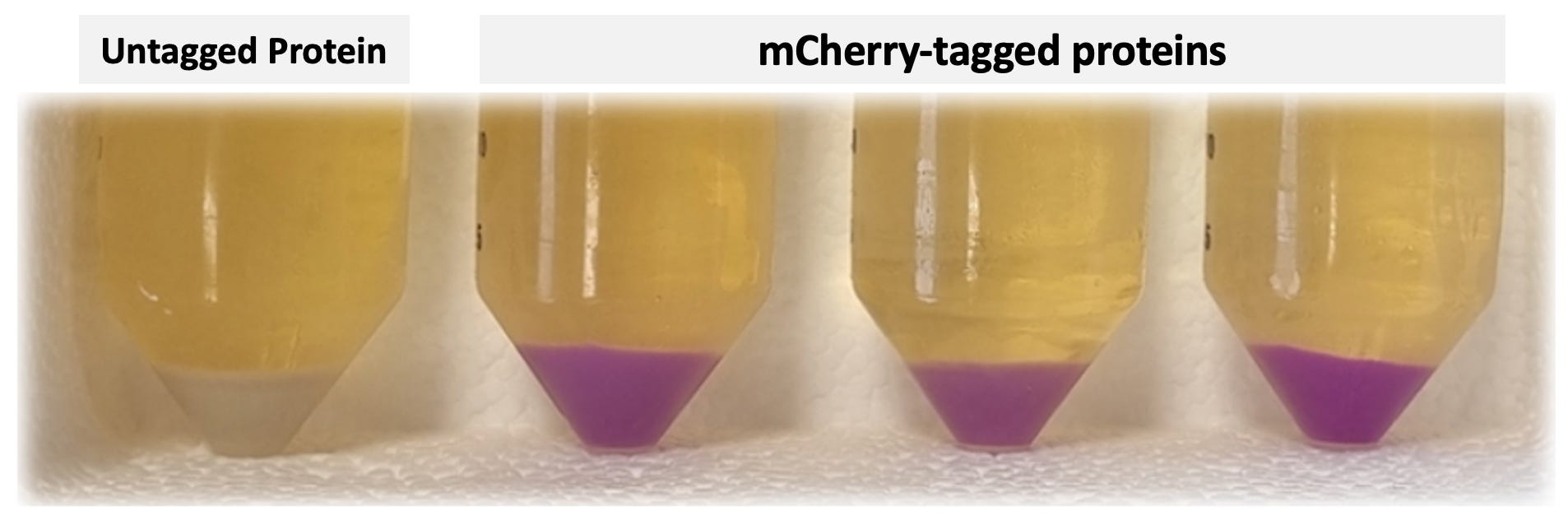
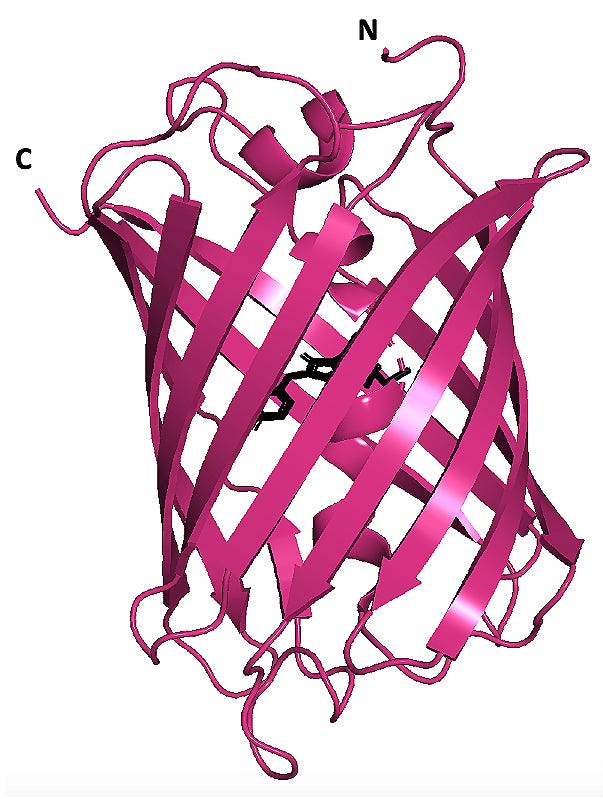
One of the commonly used fluorescent protein is mCherry (mCh), aptly called so. It is a relatively small 26.7 kDa protein of the monomeric red fluorescent protein family. Derived from the DsRed protein of Discosoma sea anemones and subsequently mutated, mCh has a characteristic bright red visible colour. It fluorescesces when excited at a wavelength of 587 nm and emission wavelength of 610 nm. Structurally, the amino acid residues methionine-71, tyrosine-72, and glycine-73 (shown in black) makes up the chromophore, that is shielded from the cytosolic environment by a β-barrel that is made up of 13 β-sheets and protects the three central a-helices. mCh is commonly used in biological research applications due to its good pH resistance (pKa <4.5), highest photostability (t1/2 = 68 s), and fastest maturation (t=15 min) in comparison to other fluorescent proteins.
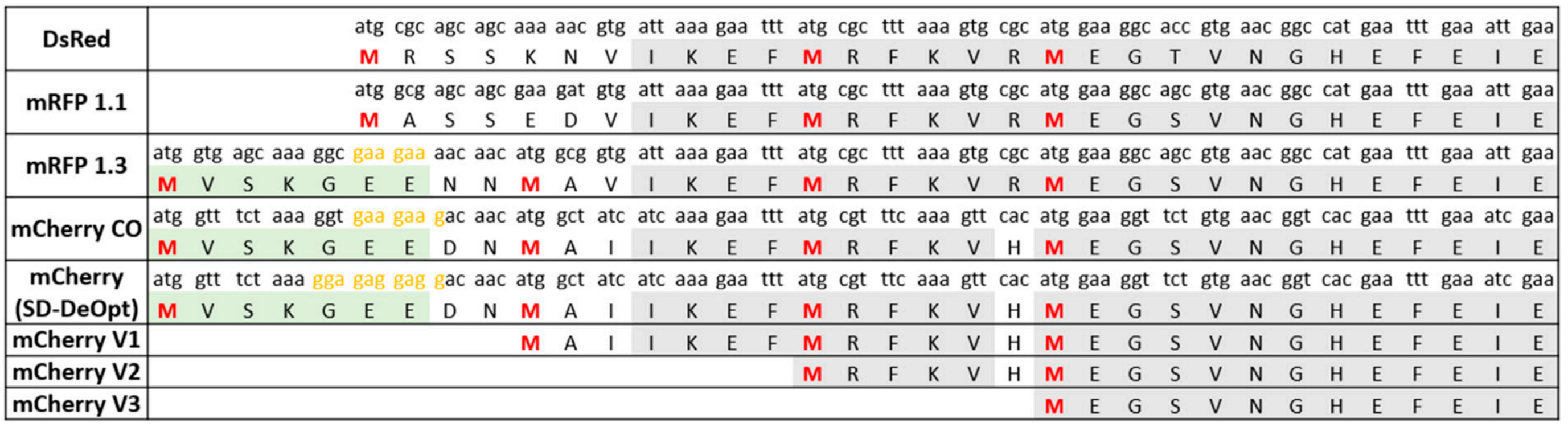
However, recently it has been suggested that the wild type mCh contains a Shine-Dalgarno sequence (site of ribosome binding) within its Open Reading Frame, followed by a methionine. This could signal to the ribosome as an alternative start site for translation. When expressed, this leads to shorter isoforms of mCh, with reduced or no fluorescent intensity. Based on whether mCh is attached to our protein-of-interest at the N-terminus or C-terminus, we very well have a case where our protein-of-interest hasn’t co-expressed along with mCh leading to a story without the main protagonist.
One of the way to overcome this is by mutating the M10 to either M10Q or M10L suggested by Fages-Lartaud et al. (2022). For my PhD research, I used M10Q and can say it definitely worked. I would highly suggest reading this paper and understand whether it applies to your protein and research as well.
Also, if you notice truncated bands of mCherry protein on your SDS-PAGE gel, that’s normal. This happens due to the hydrolysis of the acylimine bond between the chromophore and the preceding F70 residue during the boiling step during SDS-PAGE. Gross et al. (2000) can tell you more about it.
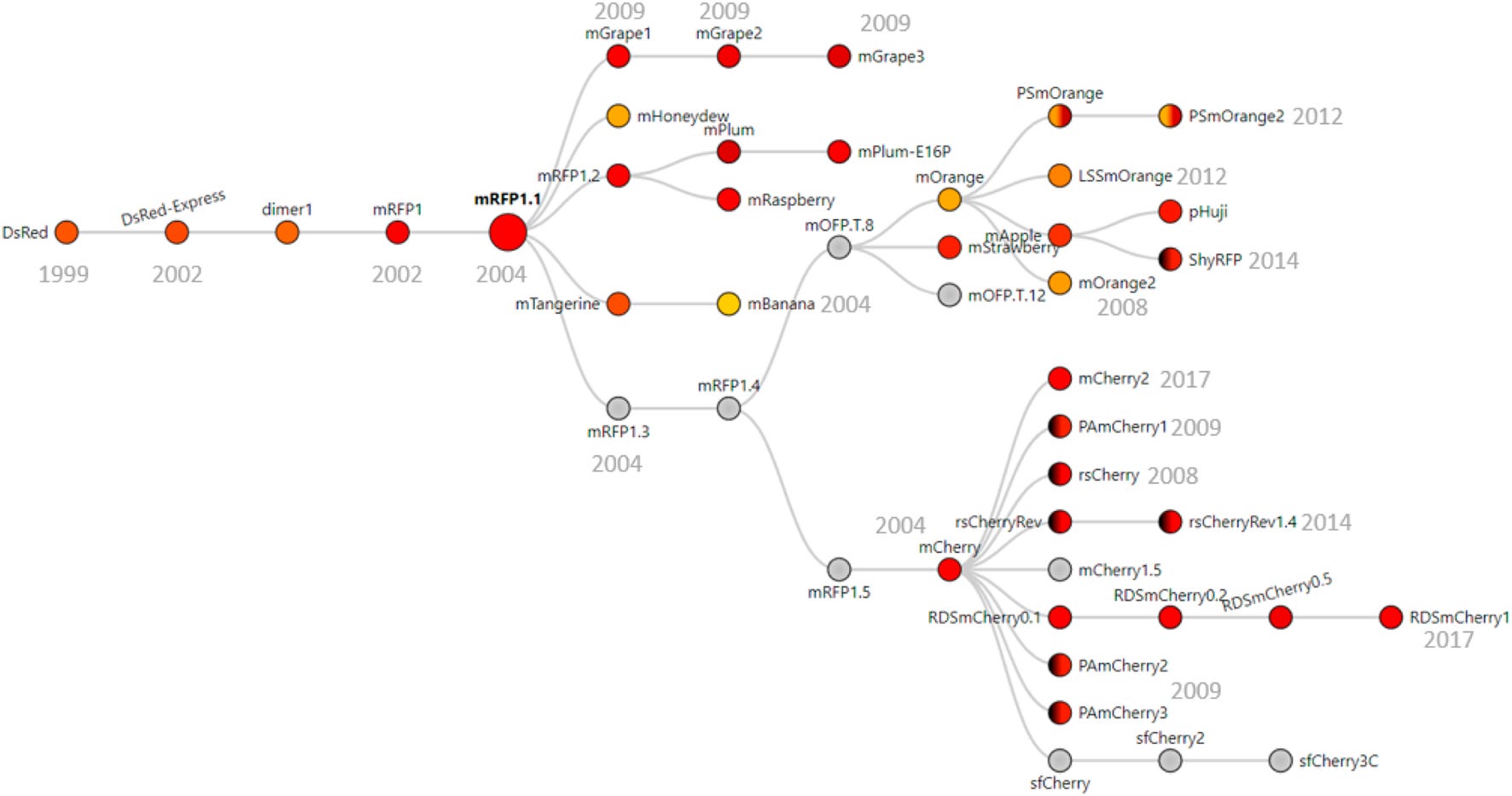
This isn’t just a case of mCherry but any of the proteins derived from the monomeric red fluorescent protein family, starting from mRFP1.1. 🙈 Throwing a word of caution out here in case you work with red proteins.
This site is free and I intend to keep it that way for as long as I can because good science communication should be accessible, especially for students. If you enjoy what you read and feel like buying me a coffee along the way, I won't say no. ☕ And if you're not a student, consider paying it forward to one who is.
4. In Silico
With the advent of recombinant antibodies, one of the crucial parameters to assess of any antibody during computational design and development is its “nativeness”. Being developed outside the immune system in the lab, nativeness essentially tells us the likelihood that a sequence belongs to the natural immune repertoires. Quantifying this likelihood helps scientists understand which synthetic hits are likely to be stable, non-toxic, and can be developed for application. The higher the likelihood, chances are it will translate into viable, developable drugs.
When we think about nanobodies (a kind of antibodies lacking a light chain and sourced from camelid species - camels, alpacas, llamas), there is a need to humanize them for therapeutic use. With humanization, comes the trade off that we are making them “less camelid”, also referred to as VHH nativeness. Finding that sweet spot is ideal to balance the humanness required for human safety with the VHH-nativeness required for structural and biophysical integrity (if that makes sense).
Think of it like ordering a coffee at Starbucks - we can make improve upon the drink as much as we’d like by adding the vanilla or toffee nut syrup, caramel drizzle or mocha sauce, whipped cream, iced brown sugar, some chocolate shavings, and frap it all up. But in doing so, we end up with a dessert and not something we can truly call coffee. No hard feelings against them (or Starbucks), I do love to enjoy their peppermint mocha on a nice snowy day. But, it’s really about asking oneself - do we want a dessert today with a tinge of caffeine or do we want coffee with a little sweetness?
And in the case of antibodies, do we really want to humanize the nanobodies to an extent where we circumvent immune rejection, but lose all the native camelid-like properties, the main reason we switched it to nanobodies in the first place?
Enters AbNatiV2! AbNatiV2 is a tool to measure this nativeness and was developed by the Sormanni lab (where I did a portion of my PhD project). It builds upon the original AbNatiV that was limited by a small training set. AbNatiV2 was developed based on a dataset of 21 million nanobody sequences, compared to 2 million in the original version. This substantially improved nativeness classification and CDR grafting detection. It also includes p-AbNatiV2, a new paired model that jointly scores VH/VL humanness and predicts chain pairing likelihood.
Additionally, the AbNatiV2 model also studied real-world case scenarios by mapping the nativeness landscape of 36 clinical-stage nanobodies. Notably, Caplacizumab, the first FDA-approved nanobody drug used to treat thrombotic thrombocytopenic purpura (TPP), displayed a low humanness score of ~0.6 (the threshold being 0.8), however this was higher than its parental llama-derived VHH precursor which scored only 0.4, showing the advantages as well as a scoring scheme to measure engineering progress. It challenged the “native” requirement in that antibodies do not strictly need to be “human-like” sequences to be effective and developable.
The paper is well written and you can read it online on the mAb journal at this link.
AbNatiV2 is available to all on the web server housed by the University of Cambridge. Registration is free and takes a few minutes. If you do, you can also check out Camsol as well, a solubility profiler of proteins, on the same server (something I discussed on The Binding Brief #04).
5. Antibody Term of the Week
Today’s Term of the Week is one I spent five years researching: the single-chain variable fragment, or scFv.
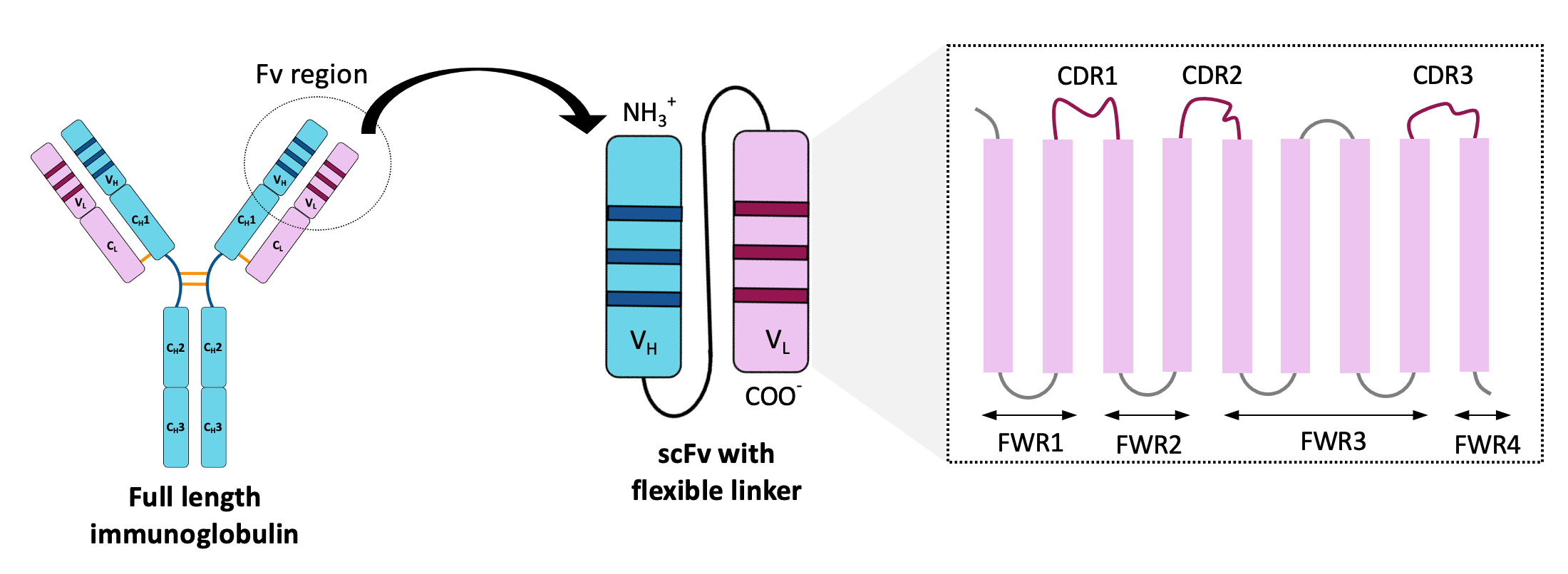
When we look at a full length antibody, it has 2 heavy and 2 light chains held by disulphide bonds, comprising both both variable and constant regions. But, what if you are interested only in the region that binds the target? An scFv is literally the stripped down version of a full length immunoglobulin!
As the name implies, it consists of just one variable heavy (VH) and one variable light (VL) domain, and hence single chain, joined by a short, flexible linker typically rich in glycine and serine residues.
Most importantly, an scFv retains the precise antigen-binding specificity of the original antibody. Because it is significantly smaller (25-30 kDa) than a full-length antibody (~150 kDa), it can penetrate tissues and solid tumors more effectively, can be easily made in the lab using E. coli bacterial host systems, and eliminates unwanted Fc-mediator effector functions.
Antibody engineering is a massive field, but designing the linker alone is complex enough that researchers spend years on it. In scFvs, these linkers typically contain glycine-serine residues for a couple of reasons:
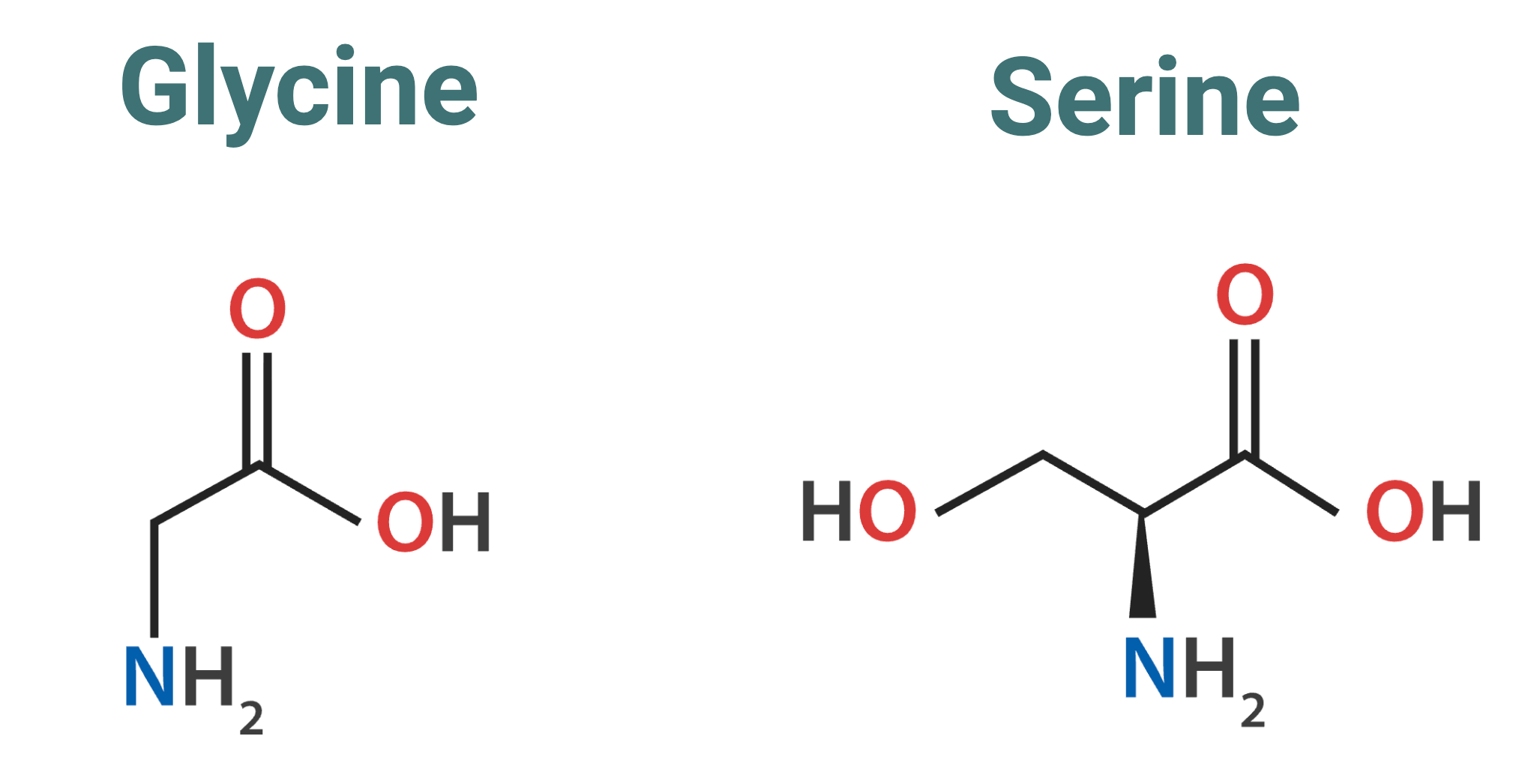
Glycine provides unmatched flexibility: With its tiny single-hydrogen side chain, steric hindrance is eliminated allowing the VH and VL domains to rotate freely.
Serine enhances solubility: With its polar hydroxyl group (-OH), it forms hydrogen bonds with water, keeping the linker hydrated and preventing hydrophobic aggregation. It also adds necessary chain length without interfering with antigen binding.
And that’s a wrap folks! See you in 2 weeks.
I hope you all enjoyed this edition of ‘The Binding Brief’. If you have suggestions for topics you’d like to know more about… ⤵️
I am happy to hear that the gap year is helping you recover. Sending more power to you!
Love the Starbucks analogy!